
Projection Profiles establish the rules for the HPA supply and demand projection. Multiple profiles can be created to analyze various scenarios.
Prior to creating a Profile, the following must be created:
The creation of an HPA profile is divided into the following sections:
In the HPA
Projection Profiles main index, click the  button to add a hatchery capacity.
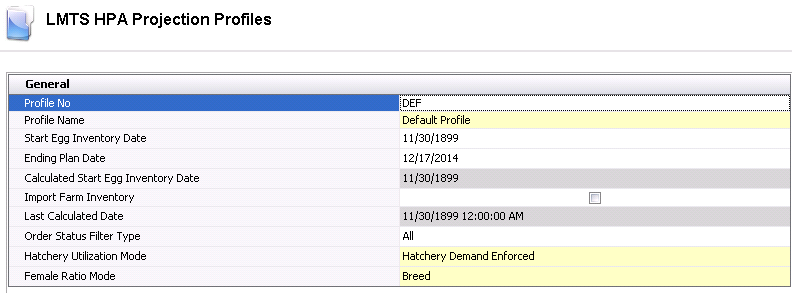
The General section contains the basic information regarding the profile.
Enter the Profile No, which is the user-defined code to identify the projection profile.
In the Profile Name field, enter a description, which will be used to identify the profile.
In the Start
Egg Inventory Date field, enter the date of the egg inventory
that will be used to start the projection. This date will also be
the start date of the projection.
I: if the start egg inventory date is not entered, the logic will use
the calculated date as the starting point of beginning HIM egg room
inventory.
In the Ending Plan Date field, enter the date that the projection will stop.
Calculated Start Egg Inventory Date is system generated and represents the most recent set date of all the hatcheries in the profile.
Select the Import Farm Inventory flag if the farm egg inventory is to be imported to the HPA projection. If the option is not selected, then only hatchery egg inventory will be used.
Last Calculated Date indicates the last date that the projection was generated.
Select the Order Status Filter Type to determine the orders that will be used for the demand in the HPA projection. Available options are: All, Confirmed Only or Tentative Only.
Select the Hatchery Utilization Mode. Available options are:
Egg Supply Utilization: Utilize egg supply of each hatchery.
Hatchery Demand Enforced: Plan egg transfers to ensure hatcheries meet their full demand.
Select the Female Ratio Mode. Available options are:
Breed: Use the ratio specified for the breed code.
Calculated: Calculate the ratio from the actual hatch results.
Registry: Get the ratio for the hatchery registry settings.
The Hatchery tab assigns the hatcheries to the profile and establishes the hatchery priority for the profile.
Click on the Hatchery section and click
to add a new hatchery..
From the Hatchery No drop-down menu, select the hatchery that is to be used in the profile.
Hatchery Name will default based on the Hatchery No selected.
Enter the Priority or order in which hatcheries are to be utilized.
Select the Import Egg Purchase Orders flag if purchased eggs are to be utilized as part of supply.
Select the Import Chick Purchase Order flag if purchased chicks are to utilized as part of supply.
Select the Use Hatchery Full Capacity flag to force the hatchery to be utilized at full capacity. If the option is not selected, then the egg set volumes will be determined based on the demand.
Select the Transfer Eggs Full Capacity flag to force the system to continue to transfer eggs until all of the hatchery capacities have been met or egg supply is exhausted.
In the Minimum Transfer Eggs field, enter the minimum number of eggs required for a transfer.

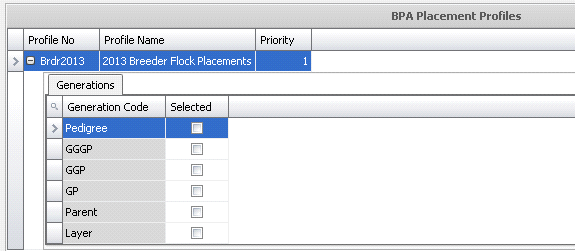
The Demand section utilizes the sales order as well as the profiles and BPA Placement Profiles in order to calculate the total amount of demand needed.
Select the Profile No from the drop down list. Must be setup in BPA as a BPA Placement Profile.
Click
on the child grid  in Profile No to select the
generation that will be used in the profile.
in Profile No to select the
generation that will be used in the profile.
Profile Name will default based on the profile selected.
Enter the Priority in which the profiles are to be used.
The Supply tab identifies the LPA profiles and the priority that will be used to source the supply for the projection.

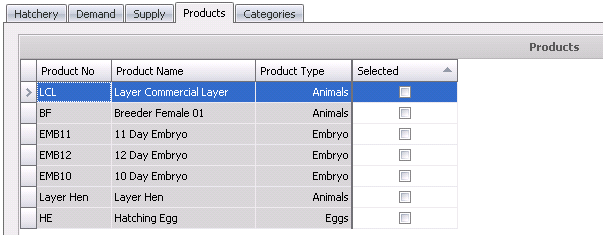
The Product tab specifies the products to be used in the profile.
The Categories tab further defines the projection into user defined categories based upon bird age and weight.
